By industry · Jewelry & watches
Jewelry & Watch
Affiliate Marketing
The Picture Does the Selling, and It Is the Part You Are Least Likely to Own
A recommendation on this shelf is mostly an image: metal in light, a piece on a wrist, two settings side by side. Almost none of it is yours by default — a creative pack is a licence with edges and a brand's website is not a library. What you photograph yourself is the one asset nobody can withdraw.
- Creative pack set per campaign
- No rates or rankings published here
- Disclosure travels with the link
- What sells the piece
- An image, long before a specification
- What you may use
- The creative pack, and your own camera
- What dates first
- The picture, while the copy still reads fine
- What a caption is
- A claim — and claims are the advertiser's
Start from the asset
Eight places an image comes from, and who owns each
Before the rate, before the window, before anything else on a jewellery or watch campaign: work out what your page is allowed to show. Two of these rows are yours outright, and the rest belong to somebody who has to say yes.
| The source | Who owns it | Settle before publishing |
|---|---|---|
| The campaign's creative pack | The advertiser, on the advertiser's terms. | What is actually in it, where those assets may run, and whether the permission ends on a date. |
| A brand's own site or social feed | The brand, and not by implication yours. | Nothing to settle: being approved for a campaign is not a licence to lift imagery. If it is not in the pack, ask. |
| Your own photographs of a piece you own | You, outright. | Only your own record: when you shot it, which variant it is, and that the piece in frame is the one you are linking to. |
| A piece lent or sent for review | Shared, and usually time-limited. | What you may show, how long you may keep publishing it, and the disclosure that has to travel with the post. |
| A retailer's listing photography | The retailer or the brand behind it. | The same question as row two, asked of a different company. Permission for one seller is not permission for the piece. |
| Marketplace and resale listings | The individual seller. | That the photo dies with the listing. When a one-of-one piece sells, the image on your page is of something nobody can buy. |
| Reader or customer submissions | The person who took it. | Written permission, and the fact that a borrowed photo still cannot carry a claim you are not allowed to make. |
| Your own comparison and scale shots | You, outright. | Accuracy and a date. Two pieces beside a coin or a wrist answers the question specifications never quite do. |
Nothing above says what any particular pack contains or how long a permission runs — that is the campaign's to state and it varies. The shelf's own mechanics, including the check a high-value order has to clear and the brand permission a page needs before it may carry a name, are on the parent: jewelry and watch affiliate programs. What is open to applications right now is in the campaign index.
The line that decides the rest
Five things that follow when the picture is the product page
Copy can be rewritten in a minute and a broken link announces itself. Imagery does neither, which is why the asset decides more about a jewellery page than the words around it do.
- 01
A creative pack is a licence with edges
It names assets, and often placements and a duration as well. Treat what is inside it as the boundary rather than the starting point, and check whether the permission has an end date — a pack that lapses does not take the image off your page by itself.
- 02
A brand's website is not a stock library
This is the commonest way a publisher on this shelf ends up on the enforcement ladder, and it is usually accidental: the piece is right, the page is honest, the image was simply taken. Approval to promote is not permission to reproduce, and the two arrive in different documents.
- 03
Your own photography is the one asset nobody can withdraw
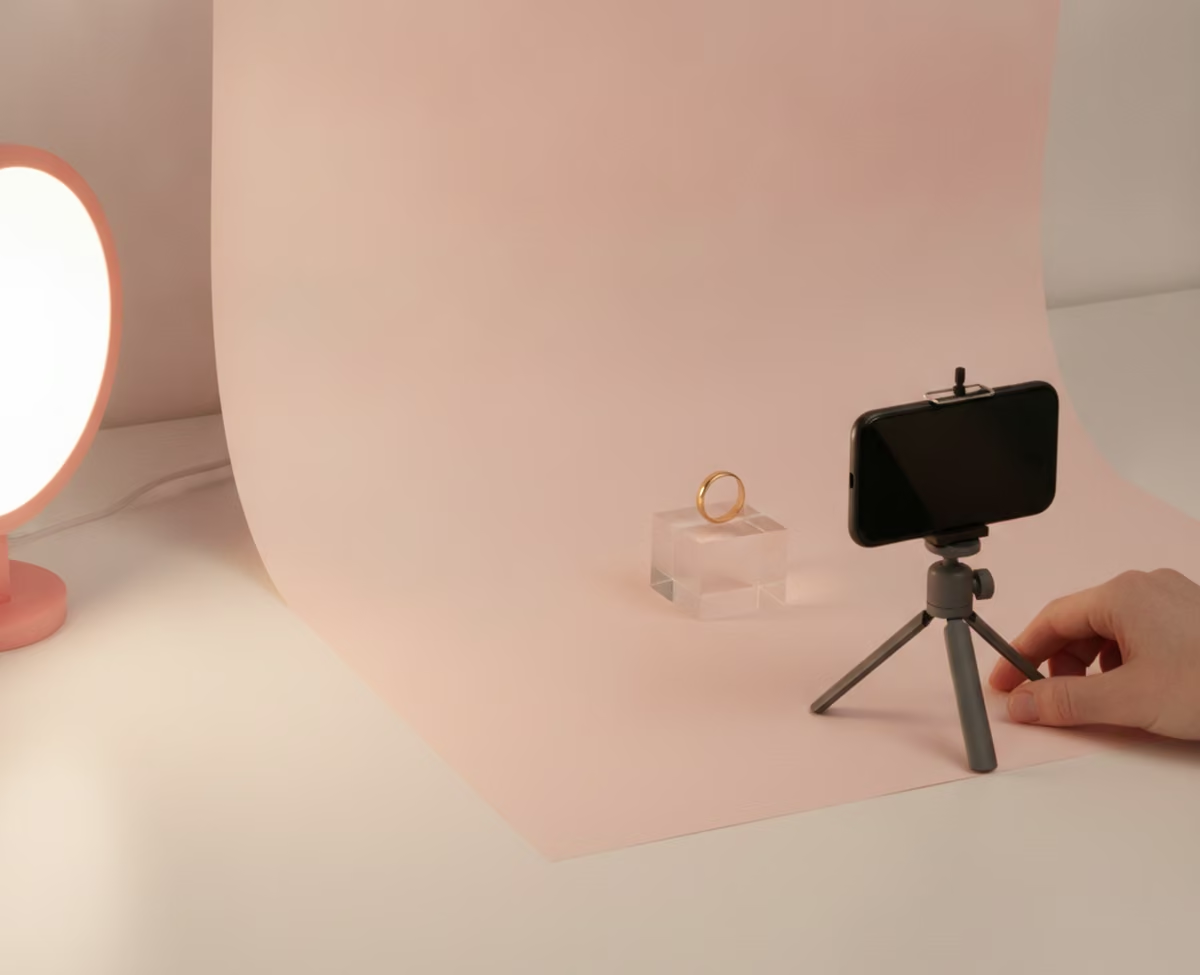
It is also the thing a reviewer is pleased to find: first-hand pictures of a piece you actually handled are hard to fake and impossible to syndicate. On a shelf where brand permission is a gate, that is the cheapest leverage a small publisher has.
- 04
An image dates a page in silence
A reference is refreshed, a finish is discontinued, a pre-owned piece sells — and the sentence beside the picture still reads perfectly well. Nothing breaks, nothing errors, and the page quietly stops describing something a reader can buy.
- 05
A caption is a claim
Purity, stone, movement, certification or condition written under your own photograph is still a statement about the product, and those belong to the seller in the seller's wording. The photo can be yours and the sentence under it still not be.
Row five is the parent's argument, stated once and linked rather than re-run: authenticity, purity, certification and condition are the seller's statements in the seller's wording, and the parent page sets out what is yours to say and what is theirs. Creative accuracy, live-price accuracy and the three-rung ladder behind row two are on the campaign guidelines; what a reviewer opens when you apply is on how approval works.
How it is actually done
Five steps from shoot to published — and the one you repeat
Four of these happen once per page. The fifth is the job: an image-led page fails quietly, so the only defence is opening it again on a schedule you keep.
- 01
Settle the source first
Before anything is produced, decide where the image is coming from: the pack, your own camera, or a loan. That choice sets what the page can look like and how long it stays publishable.
- 02
Shoot what you actually have
Photograph the variant you are linking to, not a near-match, and note the date you shot it. A close-enough finish is the fastest way to describe something the reader will not receive.
- 03
Publish the piece, not just the price
Name the variant plainly and carry the price with the date you checked it. Live prices where the campaign requires them; a dated figure everywhere else.
- 04
Label every link separately
A sub ID per placement, and a category link rather than a unit link where stock is one of one. The report can then tell you which picture earned, not only which campaign did.
- 05
Re-check image first, on a cadence
The recurring step. Open the page, look at the picture before the paragraph, and ask whether that exact piece is still buyable. Everything else on the page fails loudly; this fails quietly.
Step four is worth setting up before an archive gets large: link anatomy and the five sub ID slots are on tracking links, and where a conversion sits before it is payable is on payouts. Step five is also the answer to a market question — a conversion from a market a campaign does not list is rejected rather than repriced, so the re-check covers where your readers are as well as what they can see.
What you are building
Three page types, three different clocks
The format decides how fast the page goes wrong, which is the practical reason to pick one deliberately rather than writing whatever the keyword suggests.
-
Type one
The best-of list
The format the keyword asks for.
Publishable, and a commitment rather than an asset: every row carries a picture, a price and a stock position, and all three move. Say what the ordering is based on at the top, date the figures, and keep the list short enough that you will actually re-check it.
Ages fastest. Re-check on the tightest cadence you keep.
-
Type two
The single-piece review
Where your own photography pays.
One piece, handled, photographed and described in your words — the page a brand is most comfortable being on and the one a reader trusts. It dates slowly while the piece is current, then all at once when the reference is refreshed.
Ages slowly, then suddenly. Watch for model refreshes.
-
Type three
The occasion guide
Written for somebody buying for another person.
A gift audience needs decisions made for it: fewer options, clearer reasons, and delivery realities stated plainly. The occasion clock this runs on — cut-offs, stock and the weeks either side of a date — is the seasonal shelf's subject rather than this page's.
Ages on the calendar. Rebuild rather than patch each year.
The third card routes rather than competes: occasions, delivery cut-offs and the weeks either side of a date are the subject of seasonal and gifts affiliate programs. Brand terms that apply across the whole price band — bidding, code policy and which placement types are accepted — are on luxury goods affiliate programs, and formats and disclosure on a long-lived archive are on bloggers and content creators.
The paperwork
What to record once, and what to re-check forever
Neither list is long, and together they are the difference between an archive you can maintain and one you eventually delete. Keep the left one when you publish; run the right one on a cadence.
-
Record when you publish
- The date you checked the piece, the price and the stock
- The exact variant or finish the picture shows
- Where the image came from, and whether that permission ends
- Whether the link is to a unit or to a category
- The sub ID used for that placement
- The market the campaign served when you published
-
Re-check on a cadence
- The picture: is that exact piece still buyable
- The price and currency beside it, against what the seller shows now
- Whether the link still lands on the piece rather than a listing page
- Whether the creative pack you drew from has been replaced
- Whether any caption has drifted into a claim you may not make
- Whether the campaign still serves the markets your readers are in
The right-hand list is in priority order on purpose: the picture first, because it is the only line that can be wrong while everything around it looks right. Dates and thresholds for what has already cleared are on the payment schedule.
Questions
Marketing questions, answered plainly
What publishers ask before building lists, reviews and guides on a shelf where the imagery is licensed and the stock moves.
What are the best jewelry affiliate programs?
No ranking is published here, and a ranked list elsewhere is usually the list-maker's own links. On this shelf the more useful question is what you can publish about a piece at all — what imagery you may use, what you may say under it, and how quickly that stops being true. The mechanics of choosing a campaign are on the parent, and what is open to applications is in the campaign index.
How do I choose between watch programs?
Compare what they permit before what they pay: the creative pack, bidding terms, whether your placement type is accepted, and what happens to a conversion when a one-of-one piece sells. A campaign that pays less and lets you publish the page you had in mind is worth more than one that refuses it.
Can I use a brand's product photos?
Only what the campaign's creative pack gives you. Being approved to promote a brand is not permission to reproduce its imagery, and taking pictures from a brand's website or social feed is one of the quickest ways onto the enforcement ladder — the campaign is paused with a notice, the affected conversions are invalidated, and severe or repeated breaches end the account.
What if there is no creative pack?
Then the answer about imagery is already given: shoot your own, or publish a page that does not need product photography. It is also worth asking the campaign directly rather than assuming silence means yes, because nothing on this page can tell you what any specific pack contains.
Do I have to own the piece to review it?
No, but first-hand photographs are the one asset nobody can withdraw, and reviewers notice them. If a piece is lent or sent, settle what you may show, for how long, and how the arrangement is disclosed — the disclosure travels with the post wherever the link appears.
Can I publish a top-ten list on this shelf?
Yes, as long as you treat it as maintenance rather than an asset. Say what the ordering is based on at the top, date every figure, keep it short enough to re-check, and avoid ranking on anything you cannot verify. Outcomes and value claims are not yours to assert in any case.
Why do my product images stop matching what is on sale?
Because references get refreshed, finishes are discontinued and pre-owned pieces are one of one. Nothing in the page breaks when that happens — the paragraph still reads well — which is why the re-check routine above starts with the picture rather than the text.
Can I caption my own photo with the metal or the movement?
Only in the seller's wording, attributed. A photograph being yours does not make the specification yours: purity, stone, movement, certification and condition are statements about the product and belong to the advertiser. The parent page sets out that line in full.
Where do gift guides belong?
Build them here if the audience is yours, but the clock they run on — occasions, delivery cut-offs and the weeks either side of a date — is covered on seasonal and gifts programs. This page is about what the guide may show and how it ages, not about the calendar.
How often should I re-check a page?
No schedule is published here because it depends on the shelf: a pre-owned list can go stale in days, a single-piece review can hold for a season. Set a cadence you will actually keep, start with the image, and record what you checked and when — the pair of lists above is that record in practice.
Keep reading
- Jewelry & watch programs The parent: two gates, three sellers and the claims that are never yours
- Luxury goods programs Brand terms across the price band, and the lever you are not given
- Seasonal & gifts programs Occasions and cut-offs — the clock a gift guide actually runs on
- Fashion & apparel programs Where the everyday, plated end of this shelf is read
- Bloggers & content sites Formats and disclosure on an archive that keeps earning for years
- Campaign guidelines Creative accuracy, live prices, brand bidding and the three rungs
- How approval works What a reviewer opens, and what a held application means
Settle the imagery before you build the page
Create your publisher account, then read each jewellery or watch brief for what it lets you show — the creative pack, the placements it covers, and how long that permission runs.